Why Are Food & Beverage Costs Rising Again in Hospitality — and What Can Operators Do About It?
Why Are Food & Beverage Costs Rising Again in Hospitality — and What Can Operators Do About It?
.png)
*Disclaimer – information accurate as of May 2026, given the changing nature of the ongoing conflict data is likely to change.
Rising energy prices, global tensions and supply chain disruption are once again putting pressure on the hospitality industry.
But how serious is the situation, which categories are most affected, and what can hotels, restaurants and hospitality operators do to protect margins?
These were the key questions explored during Entegra’s recent webinar with Samuel Rosiaux, Global Supply Management VP for Food & Beverage at Sodexo Group, who shared the latest market outlook and procurement insights impacting the Food & Beverage sector across Europe.
Why Are F&B Costs Increasing Again?
According to Samuel Rosiaux, the current inflationary environment is being driven primarily by:
- Rising oil and natural gas prices
- Increased transportation and logistics costs
- Fertiliser inflation
- Global geopolitical tensions
- Weather-related agricultural risk
The global economy has slowed significantly, consumer demand is weaker, and strong agricultural harvests throughout 2025 helped create healthier inventory levels across several commodity groups.
This means inflation is expected to return in a more targeted and uneven way, rather than the widespread spikes seen previously.
How Are Energy Prices Affecting Hospitality Procurement?
Energy remains one of the biggest cost drivers across the Food & Beverage supply chain.
Increases in crude oil and natural gas prices impact:
- Farming and agricultural production
- Fertiliser manufacturing
- Packaging materials
- Distribution and freight
- Supplier operating costs
As suppliers absorb higher operational costs, hospitality operators are likely to see renewed pricing pressure across multiple categories throughout the remainder of 2026 and into 2027.
Which Food Categories Are Most at Risk?
Animal Proteins
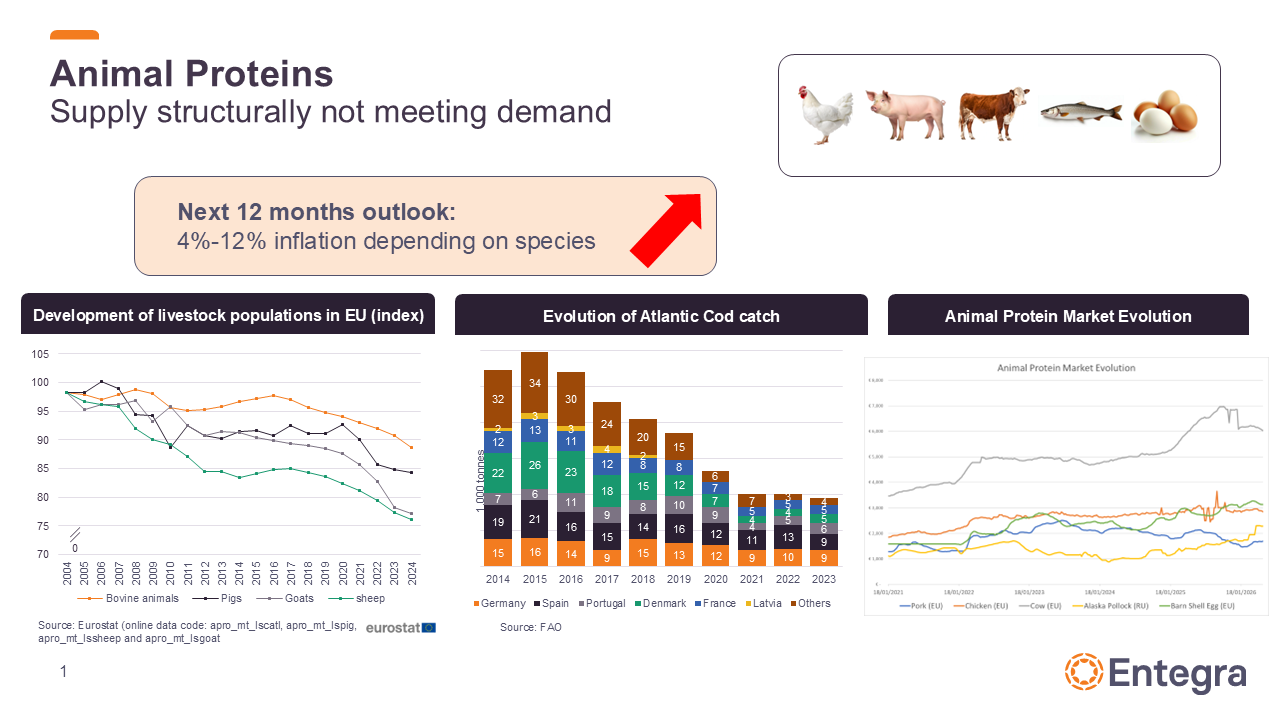
Animal proteins are expected to face the highest inflationary pressure over the next 12 months.
Current forecasts suggest increases of between 4% and 12%, driven by:
- Reduced livestock populations
- Higher feed costs
- Energy inflation
- Environmental regulations
- Ongoing animal disease outbreaks
Beef and fish remain particularly exposed to volatility, while pork continues to offer comparatively stronger value positioning.
Dairy
Dairy markets are currently more stable following strong milk production levels throughout 2025.
While some moderate inflation is expected later in the year, current conditions remain more balanced than many other categories.
Produce
Fresh produce markets remain highly weather dependent.
Rising fertiliser and energy costs combined with potential El Niño weather disruption are expected to create continued volatility across fruit and vegetable pricing.
Bakery
Bakery categories are currently showing greater stability due to improved cocoa, sugar and ingredient inventories, although wheat-related pressure may increase later in the year.
Coffee
Coffee prices are beginning to soften following significant inflation over the last two years.
Improved Brazilian crop forecasts and slowing global demand are expected to support gradual price correction in the coming months.
What Is Driving Concern Around Weather and Agriculture?
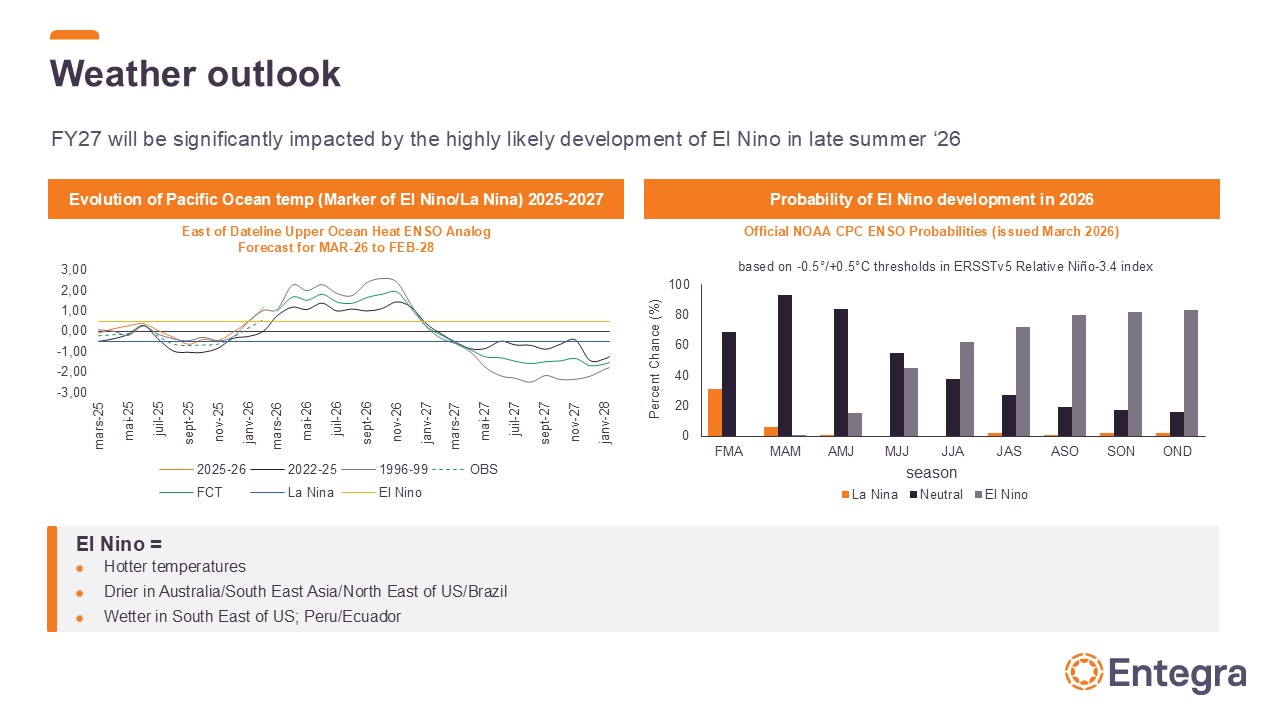
One of the biggest medium-term concerns highlighted by Samuel Rosiaux is the likely return of El Niño weather conditions later this year.
Historically, El Niño can lead to:
- Reduced crop yields
- Drier growing conditions
- Increased agricultural volatility
- Higher commodity pricing
This is expected to place additional upward pressure on key agricultural commodities including wheat, corn, soybean and vegetable oils — all of which directly or indirectly impact hospitality food costs.
What Can Hospitality Operators Do to Protect Margins?
In volatile markets, procurement strategy becomes increasingly important.
Hospitality operators should focus on:
- Reviewing high-risk spend categories regularly
- Building flexibility into menus and specifications
- Exploring product substitutions
- Monitoring supplier surcharges and delivery costs
- Timing purchasing decisions strategically
- Planning for future market volatility
The businesses best positioned to manage inflation are often those able to adapt quickly and make informed procurement decisions based on market intelligence.
How Can Entegra Help Hospitality Businesses Navigate Market Volatility?
At Entegra, we support hospitality operators by translating market insight into practical procurement action.
Our teams help clients:
- Identify cost-saving opportunities
- Improve procurement visibility
- Optimise supplier strategies
- Explore substitution opportunities
- Reduce operational inefficiencies
- Strengthen procurement resilience
Importantly, support today is about far more than negotiating prices alone. It is about helping hospitality businesses make smarter commercial decisions in rapidly changing market conditions.
While volatility across the F&B market is expected to continue, businesses that remain agile, informed and proactive will be far better positioned to protect profitability and maintain operational stability.
To learn more about how Entegra supports hospitality businesses through changing market conditions, contact our team today.